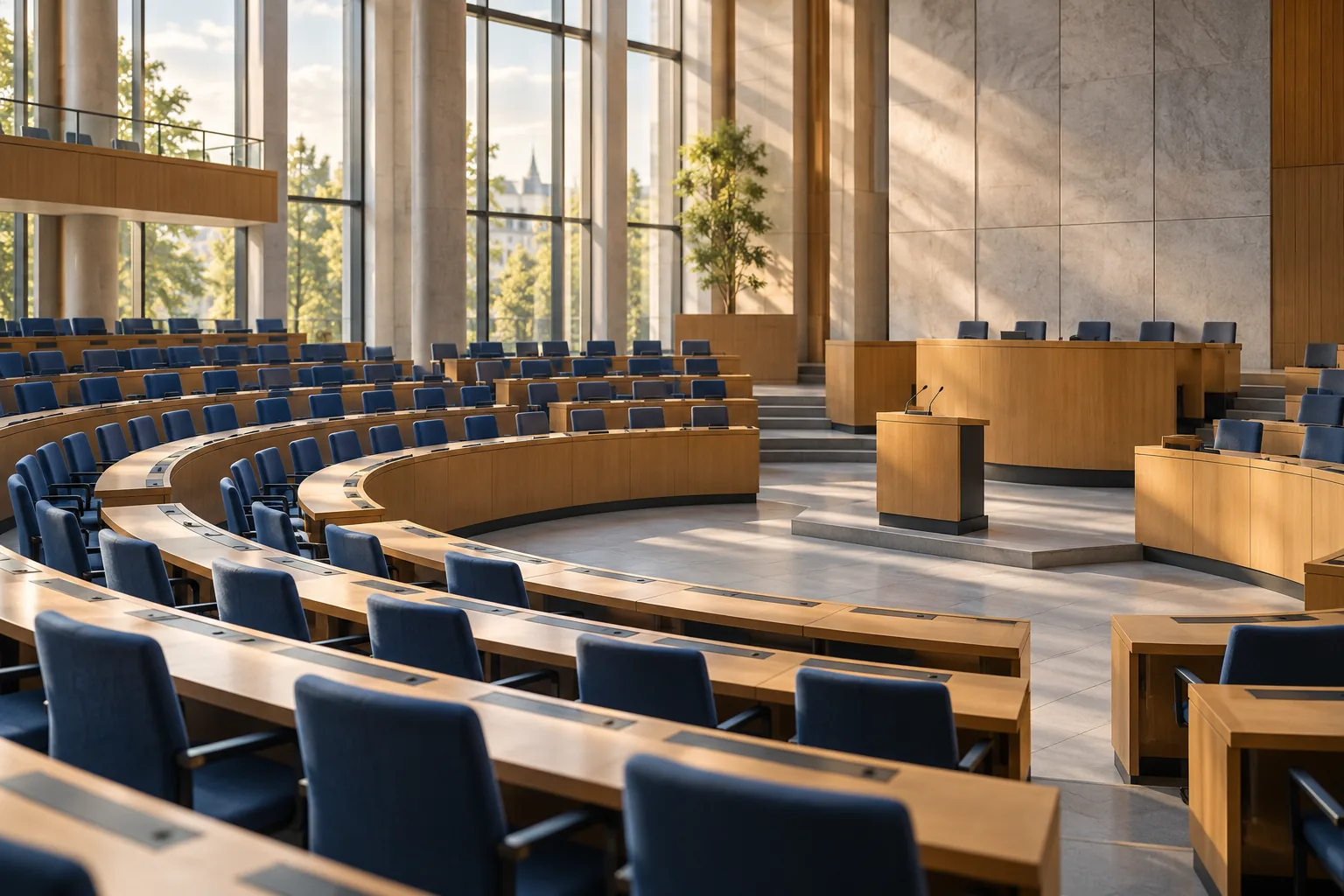
Parliament includes more than the governing side.
After an election, several parties may support a government together. The other MPs do not disappear from parliament: they continue debating, asking questions and proposing alternatives. This parliamentary counterpart to government is the opposition.
Opposition is a normal democratic role. Scrutiny can reveal mistakes and explain policy alternatives. The word does not label one party permanently: roles can change when a new government is formed. The exam answer covers all MPs outside the governing parties, not just one parliamentary group.

The other three answers
The wrong options confuse government membership with size or entry into parliament.
the governing parties.
Governing parties are the other side of this distinction. They support the government; the opposition is its parliamentary counterpart.
the parliamentary group with the most members.
The largest group is not opposition simply because it is largest. It may be part of government or outside it. Seat numbers alone do not decide the role.
all parties that reached the 5% threshold in the last election.
An electoral threshold concerns entry into parliament. Parties represented there may then be in government or opposition. The threshold does not identify which role they have.
Opposition does not mean rejecting every bill.
Opposition MPs may agree, propose compromises or reject a proposal. Article 38 gives MPs a free mandate. Their role is not to say the opposite of government regardless of the issue.
Political criticism exists outside parliament too. But the question expressly begins “In parliament”. It therefore asks about the MPs there, not everyone who is dissatisfied with government.
Article 38 · Basic Law ↗In parliament + outside governing parties → opposition.
Ask about the role. Neither the largest group nor all elected parties automatically constitute the opposition.
Three words for this question
- die Oppositionopposition
- Here, the parliamentary forces outside the governing parties.
- die Fraktionparliamentary group
- An organised group of members within parliament.
- die Koalitioncoalition
- A political alliance, often of several parties forming a government together.