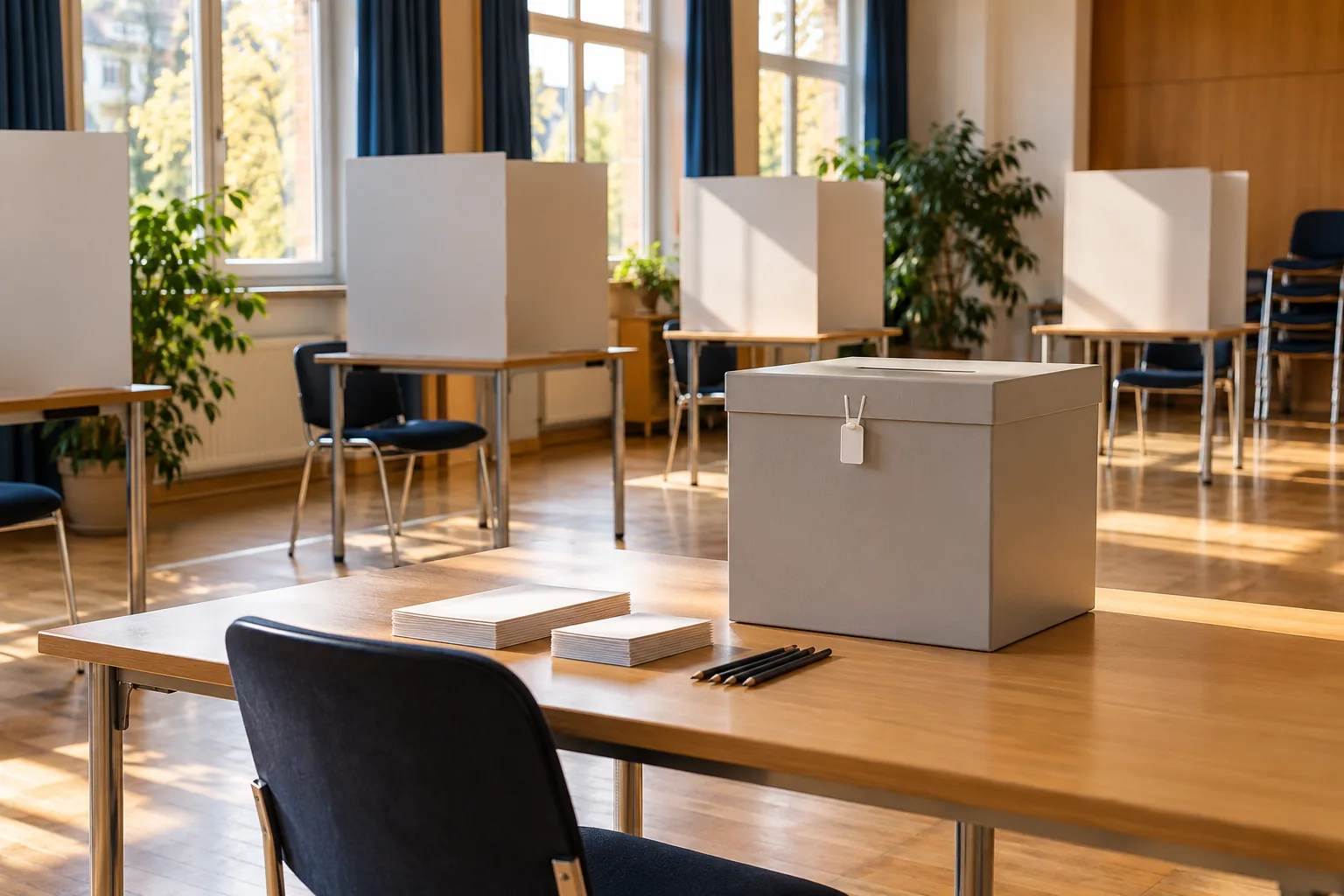
Organising and deciding are different tasks.
A municipality provides polling stations and election workers count votes. This does not authorise them to choose MPs for everyone. The decision comes from the election under the statutory rules.
Not everyone living in Germany is automatically eligible. Bundestag elections require, among other conditions, German citizenship and a minimum age of 18. Section 12 of the Federal Elections Act contains further requirements and rules for Germans abroad.
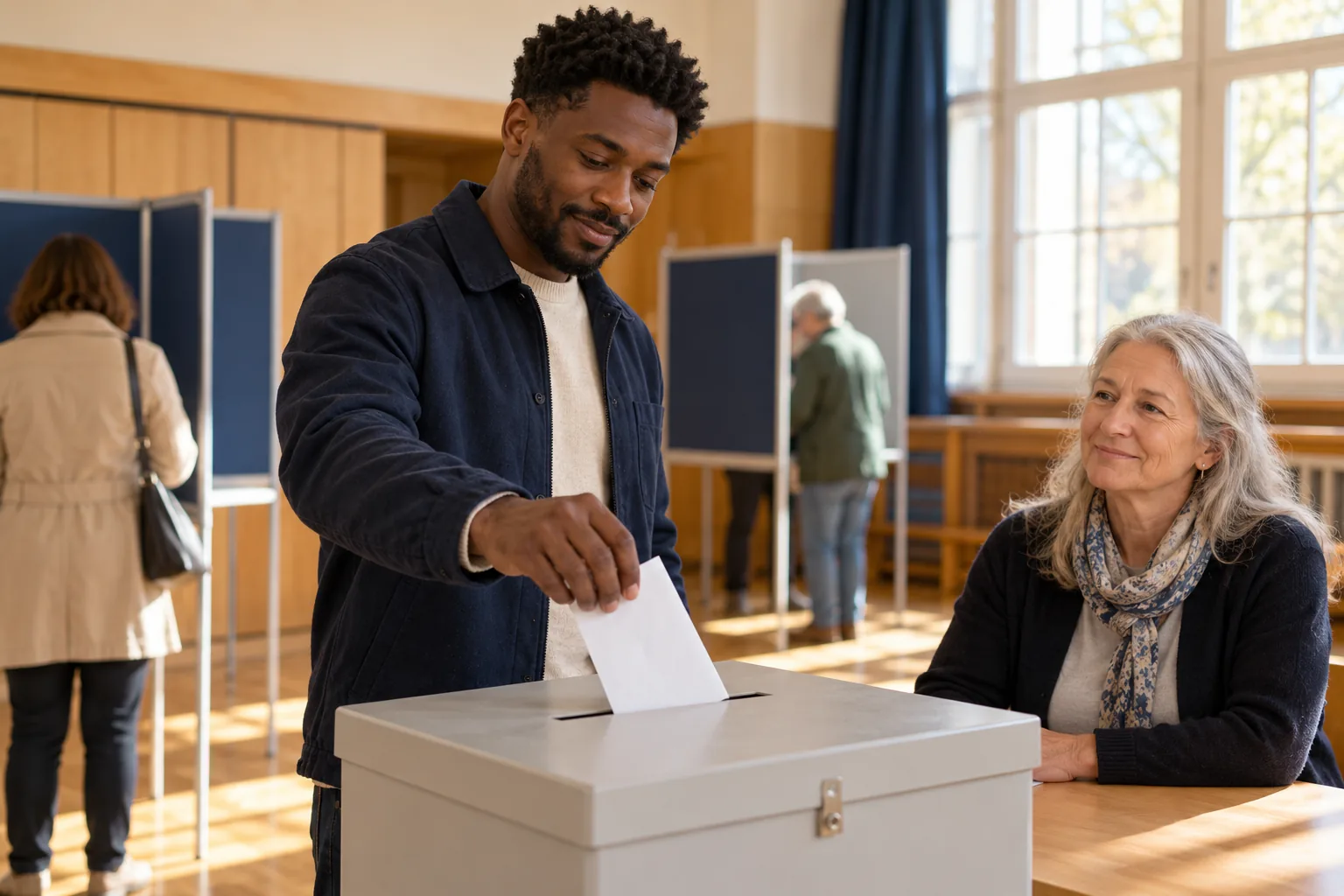
The other three answers
A profession or economic power does not replace voting rights.
the military
The armed forces do not select Parliament. Eligible service members can vote as individuals.
the economy
Companies have no Bundestag votes of their own. Eligible employees and business owners vote individually.
the administration
Public administration helps conduct the election; the electorate makes the choice.
Voting rights also depend on the election.
European, state and local elections can have different eligibility rules. Do not automatically transfer this Bundestag answer to every election.
Under Article 38, MPs represent the whole people. Their mandate belongs neither to an authority nor to a company.
Article 38 · Basic Law ↗Eligible voters choose; election bodies organise.
Separate the choice of Parliament from running the election.
Three words for this question
- wahlberechtigteligible to vote
- Meeting the legal conditions for that election.
- die AbgeordnetenMPs
- Elected members of a parliament.
- der Stimmzettelballot paper
- The paper used to cast a vote.