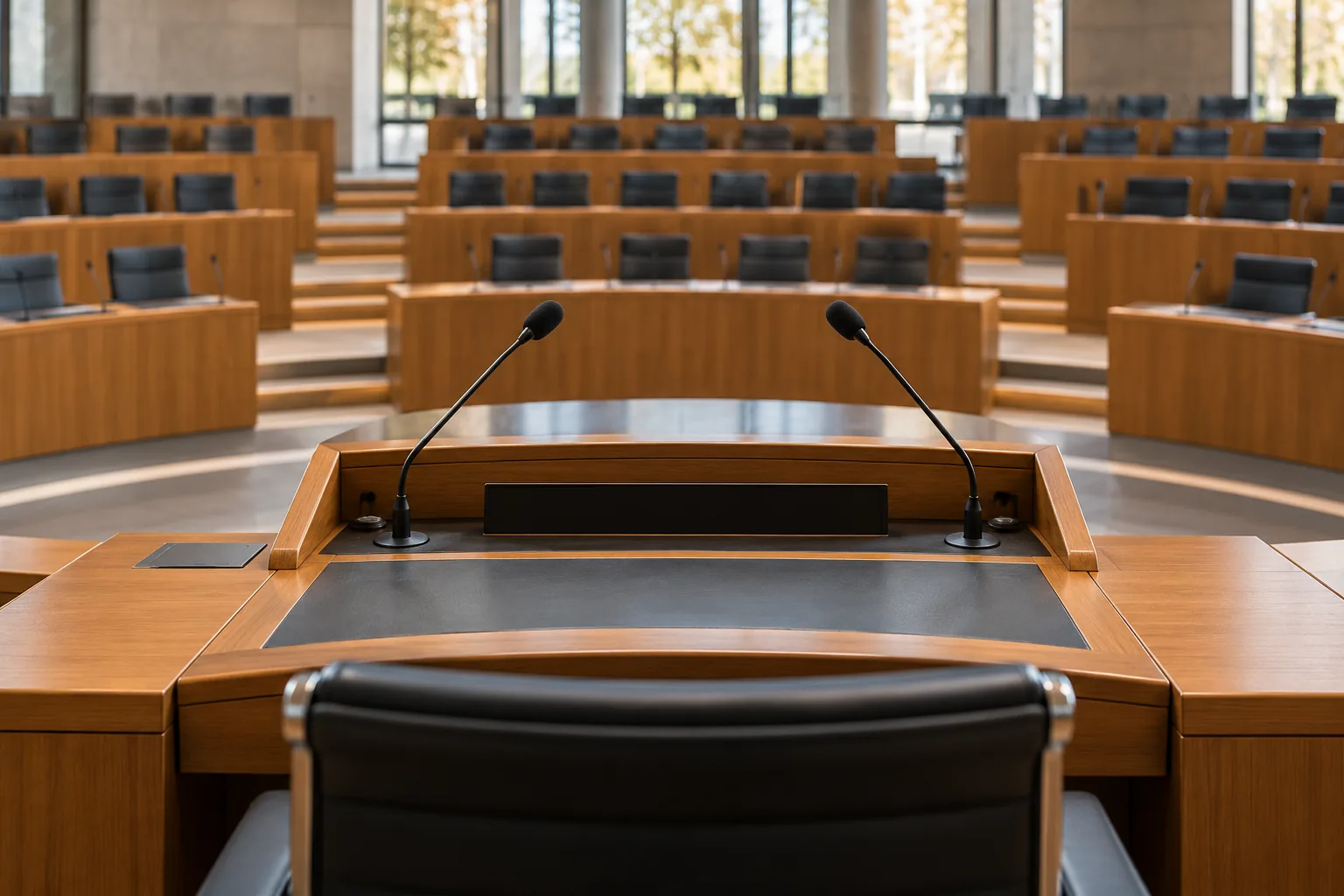
“Usually” describes parliamentary practice.
The question does not ask who receives the office without an election. It asks which group the elected person usually comes from. A parliamentary group is an association of MPs; the largest group has the most members.
The office concerns leading and representing parliament. It is not the office of Federal President, nor the governmental office of Federal Chancellor.

The other three answers
Age and former government offices are not the rule sought here.
the oldest member of parliament
Being the oldest does not automatically make someone the elected Bundestag President. Temporary chairing is also a different function.
the Minister-President of the largest federal state
Leading a large federal state is a state-level government office. It creates no entitlement to lead the Bundestag.
a former Federal Chancellor
Having been Chancellor is neither a requirement nor an automatic route to this parliamentary office.
The temporary senior chair is not the answer.
Until the elected leadership takes office, the rules assign the chair to the longest-serving willing Bundestag member. This is a temporary task, not a substitute for the presidential election.
The largest group need not itself hold an absolute majority. “Largest” compares groups with one another; “majority” concerns a share of a wider total.
Election of the Presidium · German Bundestag ↗Largest group: usual source. Bundestag: electing body.
Remember practice and procedure separately rather than turning “usually” into an automatic right.
Three words for this question
- die stärkste Fraktionlargest parliamentary group
- The group with the most members.
- das PräsidiumPresidium
- The elected President together with the deputies.
- der Alterspräsidenttemporary senior chair
- The senior member temporarily chairing under the rules of procedure.