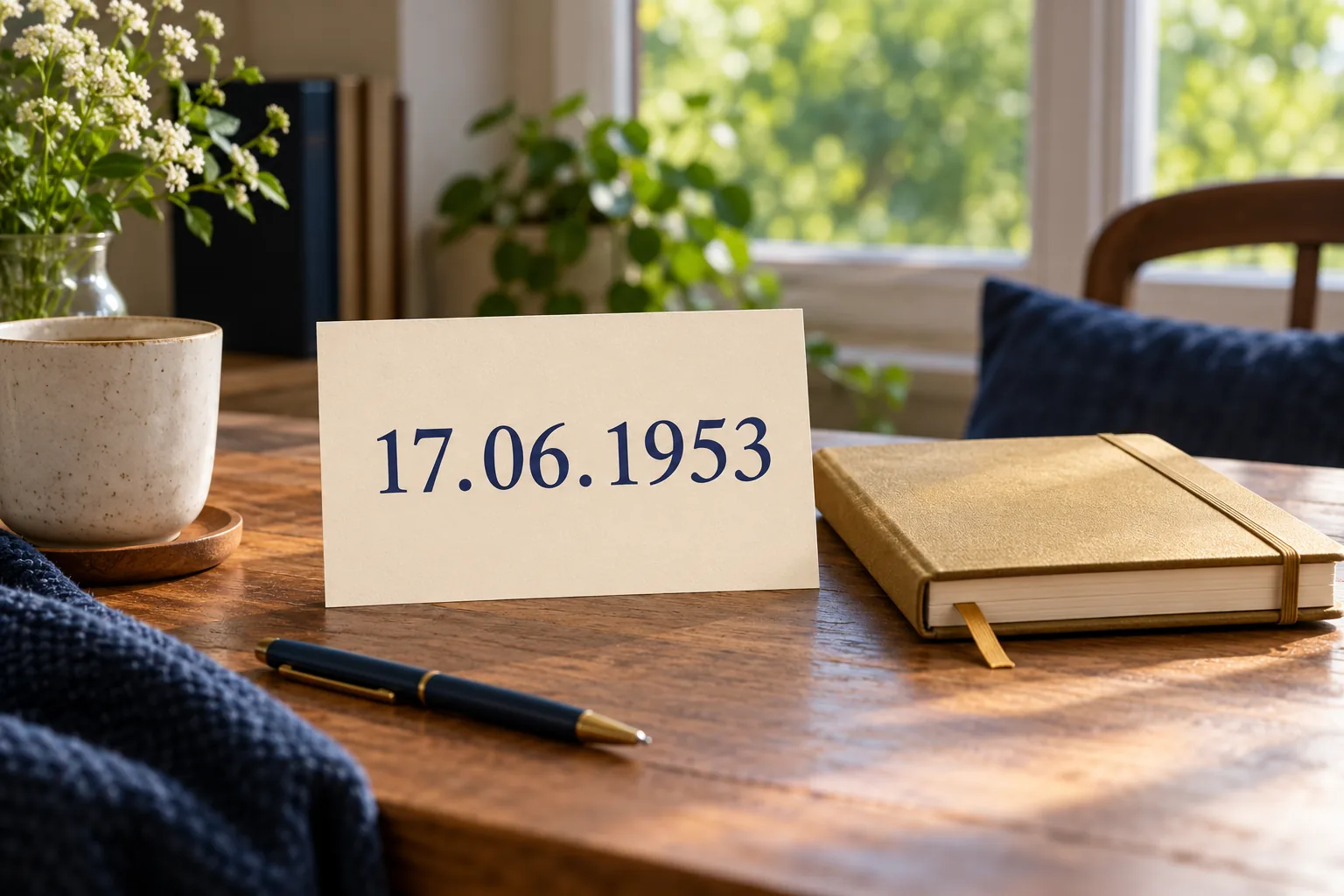
Workplace protests developed into political demands.
Increased work quotas were among the triggers: workers were expected to produce more without a corresponding increase in pay. Protests developed into demands for free elections, the release of political prisoners and changes to the system of rule.
The protests spread through East Berlin and many other places in the GDR. Soviet troops and GDR security forces suppressed the uprising. In West Germany, remembrance became linked with hopes for freedom and German unity.

The other three answers
Each date needs its own event.
May 1
1 May is Labour Day. That does not make it the date of the GDR uprising associated with 17 June 1953.
July 20
20 July particularly commemorates the attempt to kill Hitler and overthrow his regime in 1944. That was a different event under a different dictatorship.
November 9
The Berlin Wall opened on 9 November 1989. The question, however, explicitly names 1953 and the uprising of that year.
Distinguish the uprising, the holiday decision and its first annual observance.
The uprising took place in 1953. The Bundestag decided on the public holiday that same year; its first annual observance was on 17 June 1954. The holiday remained until 1990. These different years do not contradict one another.
With reunification, 3 October became German Unity Day. The 17 June remained a national day of remembrance. Protest actions had also begun before 17 June 1953; the familiar date represents developments over several days.
17 June 1953 · German Bundestag ↗17 June 1953 → uprising in the GDR.
Keep this remembrance date separate from the fall of the Wall on 9 November 1989 and today’s Unity Day on 3 October.
Three words for this question
- der Volksaufstandpopular uprising
- Widespread protest against the prevailing political system.
- die Arbeitsnormwork quota
- A set amount of work employees are expected to complete within a given time.
- der Gedenktagday of remembrance
- A day for remembrance that is not automatically a public holiday with time off work.