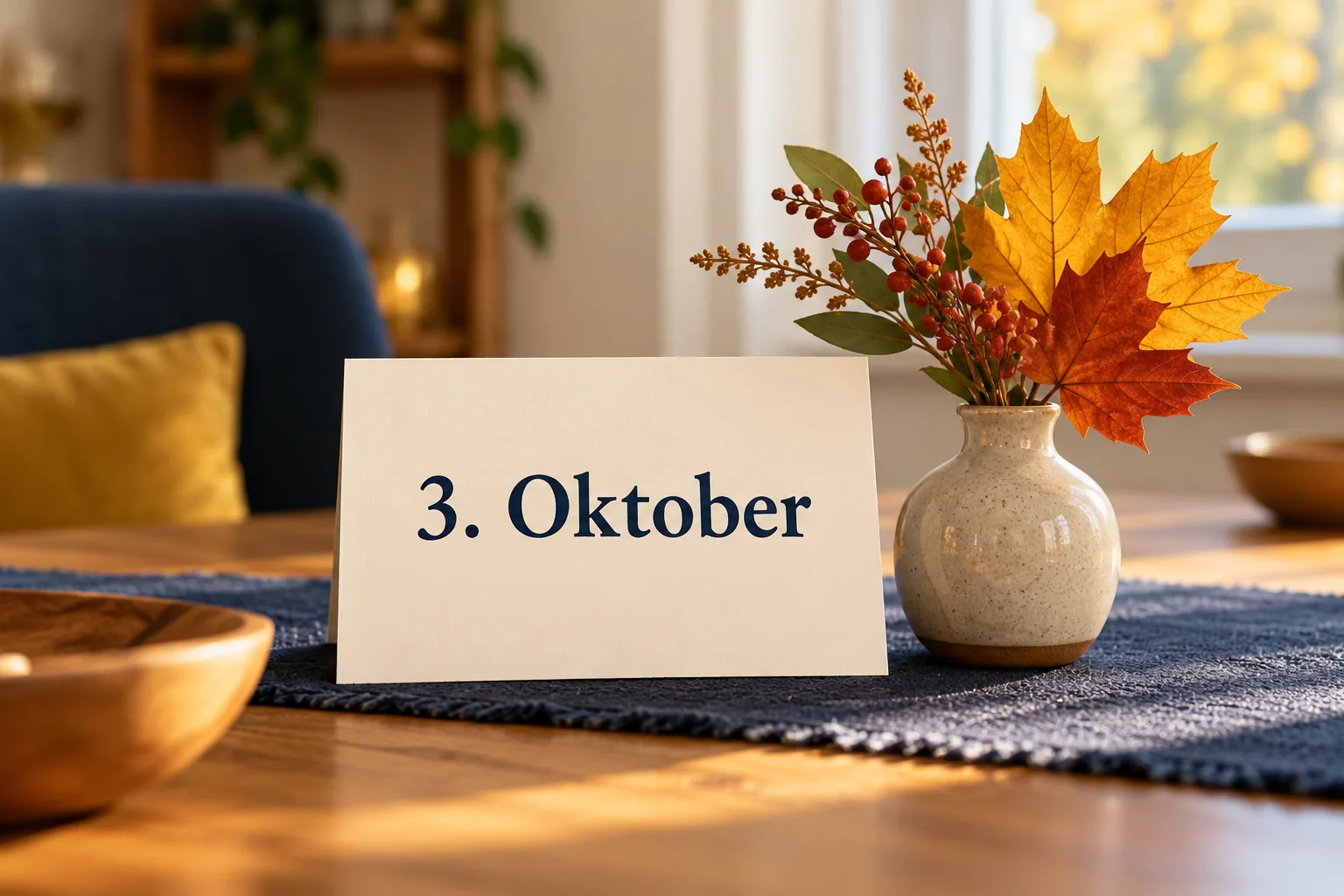
The name identifies the occasion.
“Unity” here refers to the end of Germany’s division into separate states. The GDR’s accession to the Federal Republic took effect on 3 October 1990. Brandenburg, Mecklenburg-Western Pomerania, Saxony, Saxony-Anhalt and Thuringia became states of the Federal Republic; Berlin became a reunited state.
The holiday recurs every year on 3 October. It commemorates a specific historical step, not the abolition of the federal states or a merger of all cities. Germany remained a federal state.

The other three answers
The other words do not give this holiday’s statutory name.
Nation.
“Nation” may sound plausible for a national holiday, but it is not the required word here. The full name is German Unity Day.
Federal States.
The federal states continued to exist after reunification. 3 October is not called “Day of the German Federal States”; it commemorates the country’s state unity.
Cities.
“Cities” is not the correct completion. The occasion is Germany’s reunification, not a special holiday for municipal mergers.
Three important commemorative dates have different occasions.
The Wall opened on 9 November 1989. This was a decisive event on the path to unity, but it is not the date of today’s national holiday.
Before reunification, the Federal Republic observed a Day of German Unity on 17 June in memory of the 1953 uprising. Since 1990, 3 October has been the statutory holiday; remembrance of 17 June continues.
Article 2 paragraph 2 · Unification Treaty ↗3 October + reunification = German Unity Day.
Learn the date, occasion and name together. That keeps the holiday distinct from the fall of the Wall.
Three words for this question
- die Einheitunity
- Here, belonging to the reunited German state.
- der Feiertagpublic holiday
- A day specially designated by law; here, 3 October.
- der EinigungsvertragUnification Treaty
- The treaty that regulated key conditions of German unity in 1990.