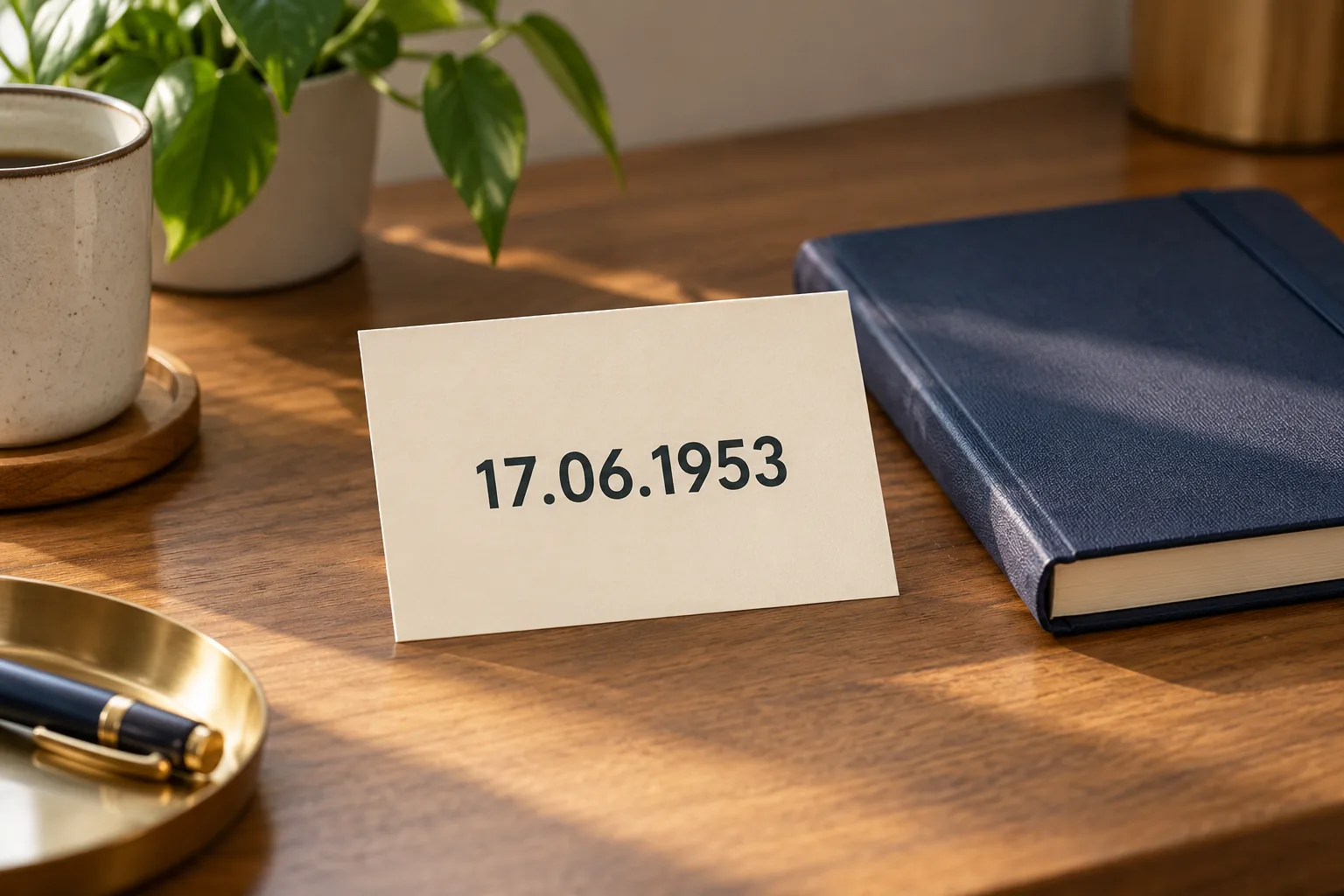
A labour dispute could develop into a political movement.
A strike initially means people collectively stopping work. But the protests of 1953 did not remain limited to workplace demands. Calls included free elections, the release of political prisoners and the government’s resignation.
That is why the correct answer names both strikes and a popular uprising. The Federal Archives describes a movement in many places over several days. 17 June is the central date for remembrance and the test, not a claim that every local action began and ended on that day.

The other three answers
The other three events belong to different years.
the ceremonial accession to the Warsaw Pact
The GDR was among the signatories of the Warsaw Pact in 1955. That was two years after the uprising, not the event of 17 June 1953.
the 1st SED party congress
The first SED congress was its founding congress in April 1946. The party’s foundation and the 1953 uprising are different events.
the first visit by Fidel Castro
Fidel Castro first visited the GDR in June 1972. Sharing the same month does not make it the event of 1953.
“Nationwide” means widespread activity, not identical participation by everyone.
People participated in different places and with different demands. The correct answer does not claim that every person or workplace in the GDR took part. It distinguishes the events from a purely local incident.
The uprising did not end with free elections or German unity. Its violent suppression is part of the explanation. The Peaceful Revolution of 1989 and reunification in 1990 were later developments and must not be dated back to 1953.
Uprising across the regions · Federal Archives ↗17 June 1953: work stoppages, political demands, popular uprising.
Link the date to the development from strike to wider movement, not to a state visit or alliance accession.
Three words for this question
- der Streikstrike
- A collective work stoppage intended to press demands.
- der Volksaufstandpopular uprising
- A broad uprising against the ruling political order.
- die Niederschlagungsuppression
- Ending a movement or uprising by force.