A capital role with a post-war history.
Mainz was designated as the new federal state’s capital in 1946. The city had suffered severe destruction, however, so the early state institutions initially worked in Koblenz. This temporary arrangement explains why Koblenz can sound plausible as a distractor.
In 1950 the Landtag decided to move to Mainz. The Deutschhaus was rebuilt for parliament, which moved in during 1951. The capital question does not ask for a date, but this sequence helps distinguish Mainz from Koblenz correctly.

The other three answers
The other cities are also in Rhineland-Palatinate, but are not its present-day capital.
Kaiserslautern
Kaiserslautern is a city in Rhineland-Palatinate. Familiarity or regional importance does not give it the role of state capital.
Ludwigshafen
Ludwigshafen am Rhein is also a city in Rhineland-Palatinate. The state capital is nevertheless Mainz.
Koblenz
Koblenz was the provisional seat of the state institutions in the early post-war years. That does not make it the answer to today’s capital question: Mainz is correct.
Federal state, state capital and town hall are different levels.
Mainz also has its own city administration. Its local responsibilities differ from those of the Landtag and state government, even though those institutions work in the same city.
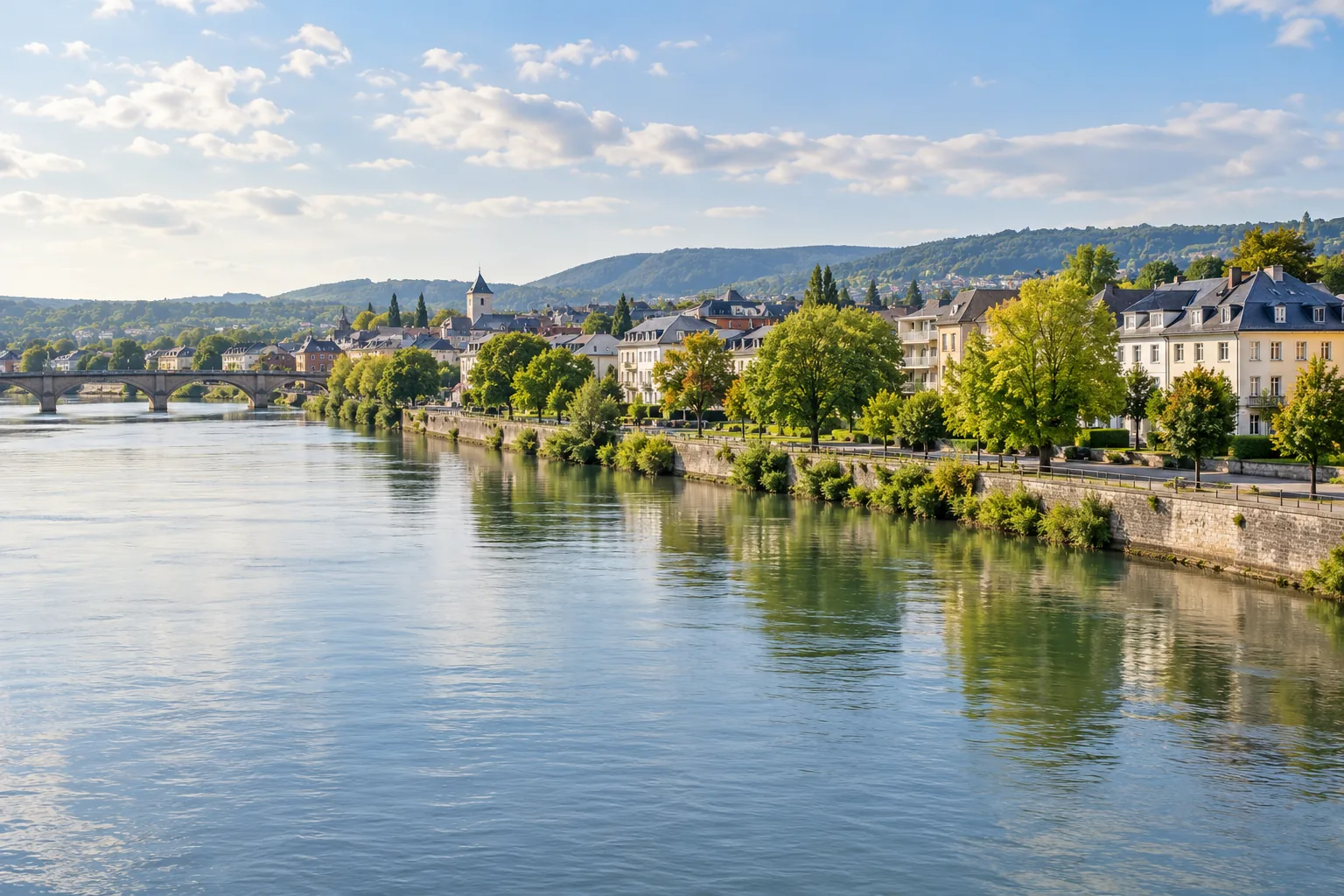
The study images are fictional urban and conversational scenes. They are not photographic evidence of the Deutschhaus or any other Mainz building. The sources link to the actual institutions.
City history and seat of government · State capital Mainz ↗Rhineland-Palatinate → Mainz; Koblenz explains the transitional period.
A former provisional role does not replace the present-day capital.
Three words for this question
- die Landeshauptstadtstate capital
- The capital of a German federal state.
- vorläufigprovisional
- Applying temporarily until a lasting arrangement is implemented.
- der Regierungssitzseat of government
- The place where the government works.